Understanding Email Send Limits in SFMC
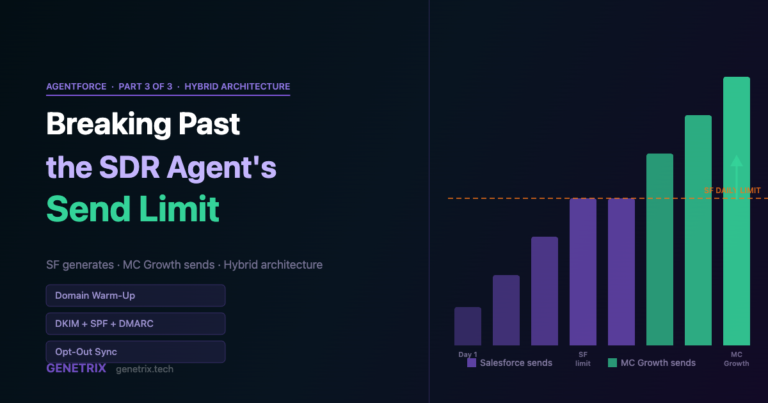
The guideline for email send limits in SFMC is 2 million emails per day per IP address, as stated in the Salesforce documentation. However, this is not a hard limit, and the actual send capacity may vary depending on several factors, including the quality of the email list, the reputation of the sender, and the configuration of the email campaign.
The root cause of deliverability issues is often related to the sudden spike in email send volume, which can be perceived as suspicious by ISPs and lead to blacklisting or spam filtering.
To avoid this, it is essential to warm up the IP address gradually, increasing the send volume over time to allow the ISPs to recognize the sender as legitimate. Additionally, it is crucial to monitor the email campaign’s performance, tracking metrics such as bounces, complaints, and spam reports to identify potential issues early on.
Best Practices for High-Volume Email Sends
When sending large volumes of emails, it is essential to follow best practices to maintain high deliverability rates. This includes:
- Obtaining consent from the recipients
- Using a high-quality email list
- Warming up the IP address gradually
- Monitoring the email campaign’s performance
- Configuring the email campaign to use a reputable sender domain
By following these best practices and understanding the guidelines for email send limits in SFMC, teams can optimize their email send volume to maintain high deliverability rates and avoid blacklisting or spam filtering.
Configuring Journey Builder for High-Volume Email Sends
To configure Journey Builder for high-volume email sends, teams can use the High-Throughput Sending (HTS) feature, which allows for higher send volumes. However, this feature should be used with caution, as it can increase the risk of blacklisting or spam filtering if not configured correctly.
Journey Builder Configuration
/* Example Journey Builder configuration */
var email = {
  "subject": "Example Email",
  "htmlBody": "Example HTML Body",
  "textBody": "Example Text Body",
  "from": {"name": "Example Sender", "email": "[email protected]"}
};
Heads up: When using HTS, it is essential to monitor the email campaign’s performance closely to avoid any potential issues.
Checklist for High-Volume Email Sends
Pre-Send Checklist
- Obtain consent from the recipients
- Use a high-quality email list
- Warm up the IP address gradually
- Configure the email campaign to use a reputable sender domain
- Monitor the email campaign’s performance
- Test the email campaign before sending
- Use a clear and relevant subject line and email content
Frequently Asked Questions
What is the guideline for email send limits in SFMC?
The guideline is 2 million emails per day per IP address.
How can I warm up my IP address?
You can warm up your IP address by gradually increasing the send volume over time.
What is High-Throughput Sending (HTS)?
HTS is a feature in Journey Builder that allows for higher send volumes.
How can I monitor the email campaign’s performance?
You can monitor the email campaign’s performance by tracking metrics such as bounces, complaints, and spam reports.
What is the importance of obtaining consent from the recipients?
Obtaining consent from the recipients is essential to maintain high deliverability rates and avoid blacklisting or spam filtering.
Need help shipping this in production?
Genetrix builds and untangles Salesforce Marketing Cloud and Agentforce setups for teams that want it done right the first time. If anything in this post sounds familiar, talk to us before it ships.